















Blockchain | Ethereum | Solidity | web3
Web3.career: Platform for Blockchain Developers

Looking to Launch Their Dream Career The blockchain industry is experiencing explosive growth, and Web3.career has positioned itself as the premier destination for developers seeking opportunities in this revolutionary space. With over 64,790 active job listings from 7,300 projects worldwide, this platform has become the go-to resource for anyone serious about building a career in…
Looking to Launch Their Dream Career
The blockchain industry is experiencing explosive growth, and Web3.career has positioned itself as the premier destination for developers seeking opportunities in this revolutionary space. With over 64,790 active job listings from 7,300 projects worldwide, this platform has become the go-to resource for anyone serious about building a career in blockchain development. Whether you’re an experienced Solidity programmer looking to work on cutting-edge Ethereum projects, or a newcomer eager to learn how to write smart contracts, Web3.career offers unparalleled access to opportunities that can transform your professional trajectory. The platform aggregates positions ranging from entry-level developer roles to senior protocol engineers, with salary ranges that frequently exceed traditional software engineering compensation by 30-50%. What makes this platform truly exceptional is its focus on quality over quantity, featuring verified companies that are actively building the future of decentralized technology. The Web3.career platform has evolved far beyond a simple job board. It now serves as a comprehensive ecosystem that connects talented developers with companies at the forefront of blockchain innovation. The platform’s intelligent filtering system allows you to search specifically for Solidity positions, Ethereum development roles, or opportunities focused on smart contracts security auditing. Updated hourly with fresh listings, the platform ensures you’re always viewing the most current opportunities available. Companies posting on Web3.career range from early-stage startups backed by top-tier venture capital to established protocols managing billions in total value locked. This diversity means that whether you prefer the excitement and equity potential of a three-person team or the stability and resources of a well-funded organization, you’ll find options that align with your career goals and risk tolerance.Donation
Coffee to stay awake, thank you very much for your contribution to keeping our website online.

Credit: Unsplash – Blockchain development workspace
Understanding how to effectively navigate Web3.career can dramatically accelerate your job search success. The platform’s advanced search capabilities let you filter by specific technical requirements, including programming languages like Solidity, Rust, or Go, as well as frameworks such as Hardhat, Truffle, and Foundry. You can narrow results by location preferences, choosing between fully remote positions, hybrid arrangements, or on-site roles in major tech hubs. Salary transparency is another standout feature, with many listings displaying compensation ranges that help you make informed decisions before investing time in applications. The platform also categorizes positions by seniority level, making it easy to find roles that match your current experience whether you’re seeking internships, mid-level positions, or principal engineering roles. Smart use of these filters can reduce your search time by 70% compared to browsing generic tech job boards that mix blockchain roles with unrelated positions.Understanding the Types of Blockchain Developer Roles Available on Web3.career
Web3.career hosts a diverse array of blockchain development positions, each requiring different skill sets and offering unique career paths. Smart contract developers represent one of the most in-demand categories, focusing exclusively on writing, testing, and deploying Solidity code for Ethereum and EVM-compatible chains. These developers must master gas optimization techniques, understand common vulnerabilities like reentrancy attacks, and stay current with evolving standards such as ERC-20, ERC-721, and ERC-1155. Full-stack Web3 developers combine traditional frontend and backend skills with blockchain integration, building decentralized applications that connect user interfaces to smart contracts using libraries like Web3.js or Ethers.js. Protocol engineers work at a deeper level, focusing on consensus mechanisms, network architecture, and the fundamental infrastructure that powers blockchain networks. Each role offers distinct challenges and rewards, with compensation packages reflecting the specialized knowledge required. Security auditors and DevOps engineers represent rapidly growing niches within the blockchain ecosystem that you’ll find extensively represented on Web3.career. Security auditors specialize in identifying vulnerabilities in smart contracts before they’re deployed to mainnet, where bugs can cost millions of dollars. This role requires deep knowledge of Solidity, common attack vectors, and formal verification techniques. Companies will pay premium rates for experienced auditors, with senior positions frequently exceeding $200,000 annually plus token allocations. Blockchain DevOps engineers focus on deployment pipelines, node infrastructure, and monitoring systems that keep decentralized applications running smoothly. They work with tools like Docker, Kubernetes, and cloud platforms while understanding blockchain-specific requirements like running archive nodes or managing indexing services. The platform also features emerging roles like tokenomics designers, DAO contributors, and Layer 2 specialists, reflecting the expanding complexity and maturity of the Web3 space.Maximizing Your Success Rate When Applying Through Web3.career
Simply browsing Web3.career and clicking apply buttons won’t maximize your chances of landing interviews. Strategic application requires understanding what companies actually look for when hiring blockchain developers. First, ensure your GitHub profile is polished and prominently features blockchain projects. Companies hiring through Web3.career will definitely review your code, so having well-documented repositories with clean architecture, comprehensive tests, and deployed smart contracts is non-negotiable. Create a dedicated repository showcasing your best work, whether that’s an innovative DeFi protocol, an NFT marketplace with unique features, or contributions to established open-source projects. Include detailed README files explaining your design decisions, security considerations, and any interesting problems you solved. This portfolio serves as concrete proof of your abilities and often matters more than years of experience listed on a resume. Tailoring your applications to specific companies dramatically increases response rates. Before applying through Web3.career, research the company thoroughly. Explore their documentation, review their smart contract code on block explorers, and understand their product’s value proposition. Reference specific aspects of their technology in your cover letter, demonstrating that you’ve done your homework and genuinely understand what they’re building. If they’re working on a lending protocol, discuss your experience with DeFi primitives and interest rate models. If they’re building NFT infrastructure, mention relevant token standards and gas optimization techniques you’ve implemented. Hiring managers receive hundreds of generic applications, so this personalization immediately sets you apart. Additionally, engage with the company on social media before applying. Thoughtful comments on their technical blog posts or participation in their Discord community can make your name familiar when your application arrives, significantly improving your chances of moving forward in the process.The Real Compensation Landscape for Blockchain Developers
Web3.career’s salary transparency provides invaluable insights into compensation across the blockchain industry. Entry-level smart contract developers with solid Solidity fundamentals and a few deployed projects typically command $60,000-$90,000 annually, significantly higher than traditional junior developer roles. Mid-level engineers with 2-3 years of blockchain experience see compensation ranging from $100,000-$180,000, often supplemented with token allocations that can substantially increase total earnings if the project succeeds. Senior Ethereum developers and protocol engineers frequently earn $150,000-$250,000+ in base salary alone, with some positions offering equity stakes or token grants worth six or seven figures. The platform’s data shows that remote positions often pay at the higher end of these ranges, as companies compete globally for limited talent pools rather than being constrained by local market rates. Beyond base salary, many positions listed on Web3.career include additional compensation that can dwarf traditional paychecks. Token allocations represent a significant component of Web3 compensation packages, though they come with added risk and complexity. Early-stage projects might offer substantial token percentages that could become extremely valuable if the protocol gains adoption, but might also become worthless if the project fails. More established companies increasingly offer restricted stock units or profit-sharing arrangements similar to traditional tech companies. Additional benefits frequently include flexible work arrangements, generous learning and development budgets for conferences and courses, hardware stipends, and co-working space allowances. Some positions even offer the option to receive full or partial compensation in cryptocurrency, which appeals to those bullish on specific tokens. Understanding the total compensation package, not just base salary, is crucial when evaluating opportunities on the platform, as two seemingly similar positions might have dramatically different total values when all components are considered.Essential Skills That Make You Stand Out on Web3.career
Technical proficiency in Solidity forms the foundation for most blockchain development roles featured on Web3.career, but mastery extends well beyond basic syntax. Employers seek developers who understand gas optimization deeply, knowing when to use memory versus storage, how to structure data efficiently, and which operations cost more gas. Security awareness is absolutely critical, as vulnerabilities in deployed smart contracts can result in catastrophic losses. You must understand common attack vectors including reentrancy, front-running, integer overflow, and access control issues, along with mitigation strategies for each. Familiarity with development frameworks like Hardhat or Foundry is expected, including writing comprehensive test suites using tools like Chai or Forge. Experience with Web3.js or Ethers.js for frontend integration, understanding of cryptographic concepts like hashing and digital signatures, and knowledge of how the Ethereum Virtual Machine executes bytecode all separate competent developers from exceptional ones. Soft skills and ecosystem knowledge significantly impact your attractiveness to potential employers browsing Web3.career for talent. Clear technical communication is invaluable in distributed teams where most collaboration happens asynchronously through written documentation and code comments. The ability to explain complex blockchain concepts to non-technical stakeholders, write clear documentation, and participate constructively in protocol design discussions makes you far more valuable than someone who simply writes code in isolation. Active participation in the broader crypto community through Twitter engagement, Discord contributions, or conference attendance demonstrates genuine passion for the space beyond just collecting a paycheck. Understanding economic mechanisms like tokenomics, liquidity pools, and governance systems helps you build better products that account for incentive structures and game theory. Finally, adaptability is crucial in this rapidly evolving field where new standards, tools, and best practices emerge constantly. Developers who proactively learn emerging technologies like zero-knowledge proofs, Layer 2 solutions, or cross-chain bridges position themselves for the most exciting and well-compensated opportunities.Navigating the Application and Interview Process Successfully
The interview process for positions found on Web3.career differs significantly from traditional software engineering roles. Initial screening typically involves a recruiter or hiring manager assessing your basic qualifications, communication skills, and genuine interest in blockchain technology. Be prepared to discuss what attracts you to Web3, which protocols or projects you follow, and your understanding of the company’s specific product. Technical assessments usually follow, often taking the form of take-home assignments where you’ll build a small smart contract or add features to existing code. These assignments test your Solidity proficiency, code organization, testing practices, and security awareness. Allocate sufficient time for these tasks and treat them seriously, as they’re often the make-or-break factor in moving forward. Some companies conduct live coding sessions where you’ll write Ethereum smart contracts in real-time while explaining your thinking process, so practice coding without documentation access to build confidence. System design interviews for senior positions require demonstrating how you’d architect complex blockchain applications end-to-end. You might be asked to design a decentralized exchange, explain how you’d implement a lending protocol, or describe your approach to building a cross-chain bridge. Interviewers assess your understanding of on-chain versus off-chain data, gas optimization strategies, upgrade mechanisms for smart contracts, and security considerations throughout the stack. Prepare thoughtful questions about the company’s technical challenges, development practices, code review processes, and approach to auditing and testing. This demonstrates both your expertise and genuine interest in the role. Throughout the process, showing enthusiasm for the specific project rather than just seeking any blockchain job makes a significant difference. Companies want team members who will contribute creatively and stay engaged during challenging periods, not just developers collecting a paycheck until the next opportunity appears. Your passion for the technology and the specific problem the company solves can be the deciding factor between multiple qualified candidates.Building Your Professional Network Through Web3.career
While Web3.career primarily functions as a job board, savvy users leverage it as a networking tool that opens doors beyond formal applications. The companies posting positions represent some of the most innovative organizations in blockchain, and researching these firms provides insights into emerging trends, new technologies, and growing niches within the ecosystem. Following these companies on social media, joining their Discord servers, and participating in their open-source repositories helps you build relationships before ever applying for positions. Many developers have landed roles through these informal connections after demonstrating expertise and genuine interest in the community. Contributing to public discussions about protocol design, offering thoughtful feedback on documentation, or helping other developers solve problems in community channels establishes your reputation as a knowledgeable and collaborative professional. The platform’s ecosystem partnerships and integrations create additional networking opportunities that extend your reach. Web3.career now operates as part of the Bondex ecosystem, connecting blockchain professionals through an expanded network of resources and connections. Attending conferences and hackathons sponsored by companies you discover through the platform puts you face-to-face with hiring managers and technical leaders. Many positions never get publicly posted because they’re filled through these personal connections established at events. Contributing to open-source projects maintained by companies listed on Web3.career demonstrates your skills directly to the teams you want to join. Even if a company isn’t currently hiring, maintainers remember impressive contributors when positions open up. This proactive networking approach, combined with strategic applications through the platform, creates multiple paths to your ideal role and dramatically increases your chances of landing positions with the most competitive companies in the space.The Future of Blockchain Careers and Web3.career’s Role
The trajectory of blockchain technology suggests that platforms like Web3.career will become increasingly essential for developers navigating this growing industry. As mainstream adoption accelerates with institutional investment, regulatory clarity, and real-world applications expanding beyond speculation, the demand for qualified blockchain developers will continue outpacing supply for years to come. Web3.career’s focus on curating quality opportunities and providing tools like salary insights, skill requirements, and company information positions it as more than a job board—it’s becoming the central hub where the blockchain talent market operates. The platform’s evolution reflects the maturation of the industry itself, moving from speculative projects to sustainable businesses solving real problems with decentralized technology. For developers considering careers in blockchain, Web3.career represents your most direct path to opportunities that would otherwise require months of networking to discover. The platform’s comprehensive coverage of the ecosystem means you’re seeing nearly every significant Ethereum, Solidity, and smart contract position posted globally, giving you unprecedented visibility into the market. As the platform continues expanding features like skill assessments, direct messaging with hiring managers, and enhanced company profiles, it’s evolving into a complete career management tool for Web3 professionals. Whether you’re making your first move into blockchain development or looking to advance to senior technical positions, investing time in understanding and actively using Web3.career will accelerate your career trajectory in ways that generic job boards simply cannot match. The decentralized future is being built right now, and this platform connects you directly to the teams making it happen.Donation
Coffee to stay awake, thank you very much for your contribution to keeping our website online.
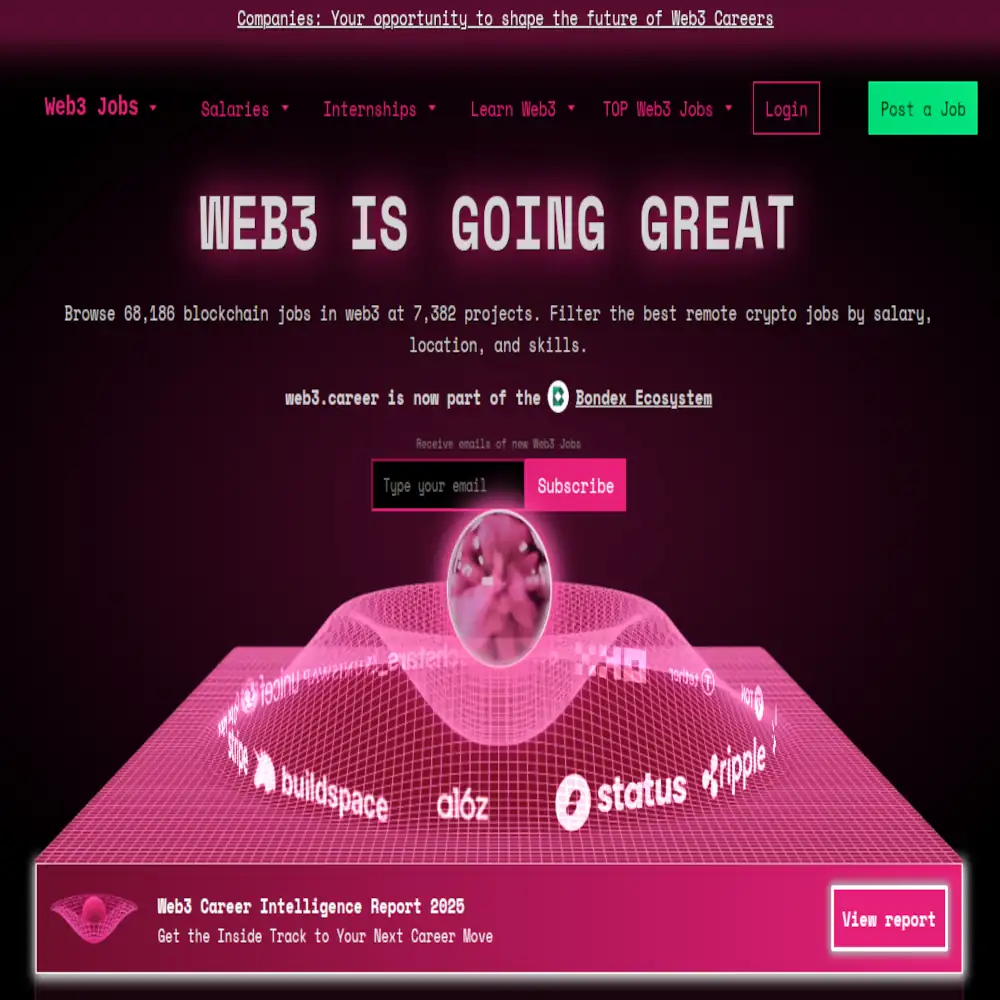 Credit: Web3.career
Frequently Asked Questions About Finding Blockchain Jobs on Web3.career
- How often are new job listings added to Web3.career?Web3.career updates its job listings every hour, ensuring you have access to the most current opportunities in the blockchain space. The platform adds hundreds of new positions daily from companies worldwide, making frequent visits worthwhile. Setting up email or Telegram alerts for specific search criteria ensures you’re among the first applicants when relevant positions are posted, which significantly increases your chances of getting noticed by hiring managers.
- Do I need professional blockchain experience to apply for jobs on Web3.career?While many positions require experience, Web3.career also lists numerous entry-level and internship opportunities perfect for developers transitioning into blockchain. What matters most is demonstrable skills through personal projects, open-source contributions, and understanding of blockchain fundamentals. A strong portfolio of smart contracts you’ve built, even for learning purposes, often carries more weight than years of unrelated software experience when applying for junior positions.
- What salary range can I expect for blockchain developer positions?Compensation varies significantly based on experience, location, and role complexity. Entry-level developers typically earn $60,000-$90,000, mid-level positions range from $100,000-$180,000, and senior roles often exceed $200,000 with additional token compensation. Remote positions frequently pay at the higher end since companies compete globally for talent. Web3.career’s salary transparency feature helps you understand market rates for specific roles and locations.
- Are the companies posting on Web3.career legitimate or are there scams?Web3.career maintains quality standards for company listings, featuring established protocols and venture-backed startups. However, you should still research any company thoroughly before accepting offers. Check their social media presence, review their deployed smart contracts on block explorers, and seek opinions from community members. Be cautious of positions requesting payment for training or asking for sensitive information during early screening stages.
- Can I find remote blockchain jobs on Web3.career?Absolutely. The majority of positions listed on Web3.career offer remote work options, reflecting the decentralized nature of the industry. You can specifically filter for remote-only positions, and many companies embrace fully distributed teams with employees across multiple continents. This flexibility allows you to work for leading blockchain companies regardless of your geographic location, though some roles may require overlapping hours with specific time zones for collaboration.
- What programming languages should I know to apply for jobs on Web3.career?Solidity is essential for Ethereum-based smart contract development and represents the most common requirement. However, knowledge of JavaScript or TypeScript for frontend development, Python for scripting and data analysis, Rust for Solana or Polkadot development, and Go for protocol engineering expands your opportunities significantly. Understanding multiple languages makes you more versatile and attractive to employers working across different blockchain ecosystems.
- How competitive is the job market for blockchain developers?While demand remains high, competition has increased as more developers enter the space. Standing out requires more than basic Solidity knowledge—you need demonstrable projects, security awareness, and understanding of DeFi primitives or NFT standards. However, compared to traditional software engineering, the blockchain job market still heavily favors candidates, with more open positions than qualified developers to fill them. Building a strong portfolio and actively engaging with the community significantly improves your competitiveness.
- Does Web3.career offer resources beyond job listings?Yes, the platform provides salary insights, skill requirement analysis, and company information that help you make informed career decisions. As part of the Bondex ecosystem, it connects to additional resources for Web3 professionals. The platform also features learning resources and bootcamp recommendations for those looking to develop blockchain skills before applying. These tools make Web3.career a comprehensive career management platform rather than simply a job board.
Have you used Web3.career to find blockchain development opportunities? What features do you find most valuable when searching for Web3 jobs? Share your experiences and any tips for landing interviews in the comments below—your insights could help other developers break into this exciting industry!