
































The First Electric Computer: Revolutionizing Computation Through Electricity

When we investigate who invented it – the first electric computer – we uncover a fascinating story of innovation that transformed human civilization. The journey from mechanical calculation to electronic computation represents one of the most significant technological leaps in history, beginning with humanity’s fundamental need for faster, more reliable calculation methods. The transition to…
When we investigate who invented it – the first electric computer – we uncover a fascinating story of innovation that transformed human civilization. The journey from mechanical calculation to electronic computation represents one of the most significant technological leaps in history, beginning with humanity’s fundamental need for faster, more reliable calculation methods. The transition to electricity-powered computation didn’t happen overnight; it was the culmination of centuries of mathematical discovery and engineering innovation. Understanding this history requires examining the specific person’s name behind each breakthrough, the computer name that made history, the country where these innovations emerged, and the exact year when each milestone occurred. This comprehensive exploration covers everything about the subject, from the earliest experiments with electromechanical devices to the fully electronic computers that established the foundation of our digital world.
Donation
Coffee to stay awake, thank you very much for your contribution to keeping our website online.
https://en.wikipedia.org/wiki/Atanasoff%E2%80%93Berry_computer
Image Credit: Wikimedia Commons
The question of which device truly qualifies as the first electric computer involves careful consideration of definitions and historical context. If we’re discussing the first calculation device to use electrical components for computation, we must examine early 20th-century developments like the Zuse Z3 from Germany. However, if we mean the first fully electronic computer, we look to the Atanasoff-Berry Computer developed in the United States. The complete story encompasses multiple pioneers across different nations, each contributing crucial innovations that collectively created modern computing. The specific computer name that deserves the “first” designation depends on whether we prioritize programmability, electronic operation, or general-purpose capability. This revolutionary technology emerged during a specific year in the late 1930s and early 1940s, a period marked by global conflict that ironically accelerated technological progress. By examining the complete timeline and understanding the context of each development, we can appreciate how these early electric computers established principles that still guide computer architecture today.
The Precursors to Electric Computation
Before fully electric computers emerged, several crucial developments paved the way for electronic computation. The late 19th century saw the invention of electromechanical devices that combined electrical components with mechanical operations. Herman Hollerith’s tabulating machine, used for the 1890 U.S. Census, represented a significant step toward automated computation. This American invention used electrical sensing to read punched cards, dramatically speeding up data processing. The person’s name Herman Hollerith deserves recognition for demonstrating that electricity could revolutionize data processing, though his machine wasn’t a general-purpose computer. His company would eventually become part of IBM, which would play a crucial role in later computer development.
Another important precursor was the Differential Analyzer, developed by Vannevar Bush at MIT in 1931. This analog computer used mechanical components but was electrically driven, representing a bridge between purely mechanical devices and fully electronic computers. During this period, several inventors across different countries experimented with using electrical relays for computation. These electromechanical devices could perform the first calculation tasks using electrical signals to control mechanical switches, though they were limited by the relatively slow speed of mechanical components. The work of these pioneers established that electricity could be used for computation, but true electronic computing would require replacing mechanical components entirely with electronic ones. The stage was set for the breakthrough that would occur later in the decade, when inventors would fully embrace electronic components for computation.
Konrad Zuse and the Z Series Computers
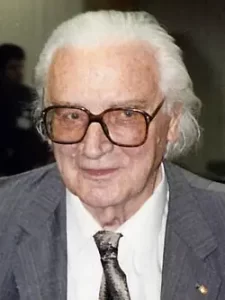
In Germany, engineer Konrad Zuse developed a series of remarkable computers that represent crucial milestones in the history of electric computation. The person’s name Konrad Zuse is particularly significant because he worked in relative isolation from other computer pioneers, yet developed sophisticated machines that incorporated many advanced concepts. His Z1 computer, completed in 1938, used electromechanical relays for computation and was the first binary computer. Though largely mechanical, it established principles that Zuse would refine in subsequent models. The Z1 was programmable using punched tape and used binary floating-point numbers, concepts that would become standard in later computers.
Zuse’s most significant achievement was the Z3 computer, completed in 1941. This German computer name – the Z3 – is considered by many historians to be the first working programmable, fully automatic computer. It used 2,600 relays for computation and memory, could perform three to four additions per second, and took about three to five seconds for multiplication. The specific year 1941 marks a crucial moment in computing history, as the Z3 demonstrated that complex calculations could be performed automatically using electromechanical technology. Though destroyed in a bombing raid during World War II, the Z3’s design influenced later computer development. Zuse’s work proved that programmable computers were feasible, addressing the need for automated first calculation of complex engineering problems. His contributions, though initially little-known outside Germany, established important principles that would be rediscovered and expanded upon by computer pioneers in other countries.
The Atanasoff-Berry Computer: The First Electronic Computer
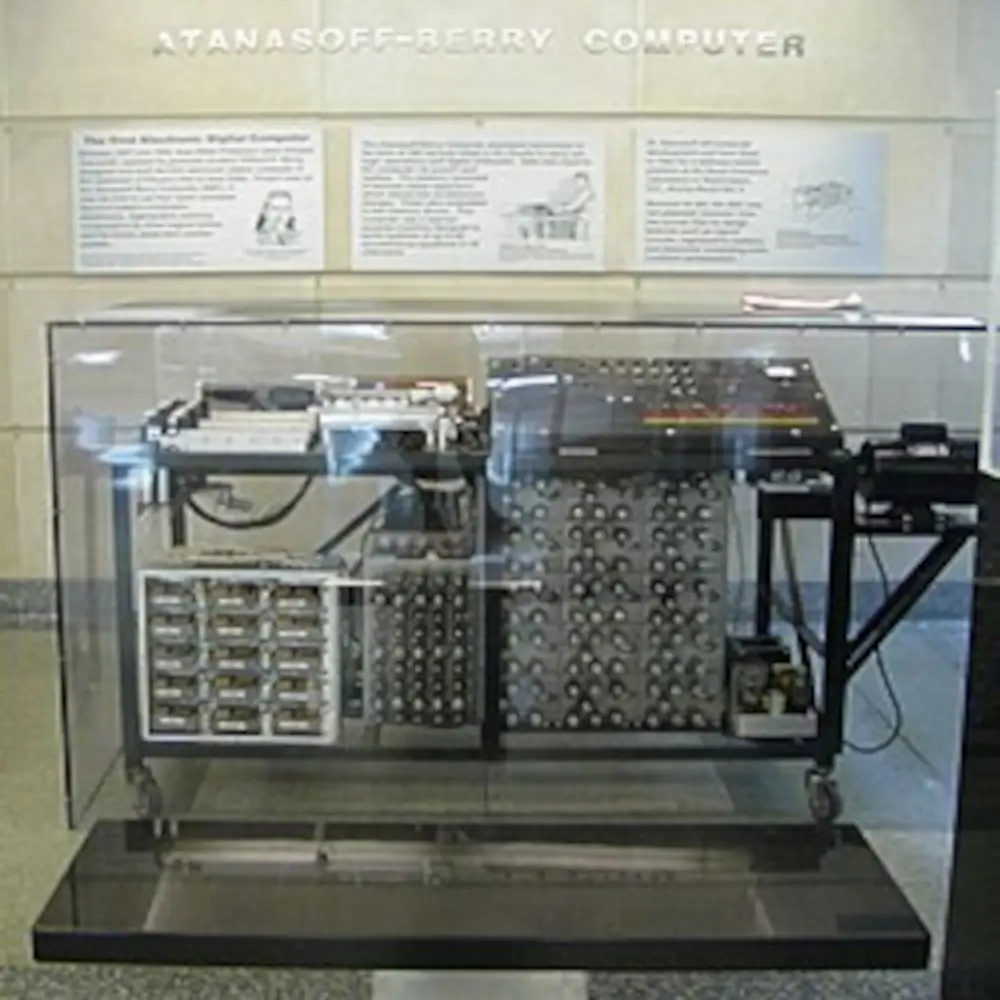
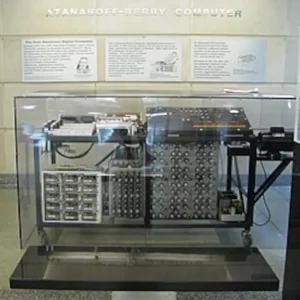
In the United States, a breakthrough occurred that would fundamentally change computing technology. The person’s name John Vincent Atanasoff, a physics professor at Iowa State College, conceived of an electronic digital computer while driving to Illinois in 1937. Working with his graduate student Clifford Berry, Atanasoff developed the Atanasoff-Berry Computer (ABC) between 1939 and 1942. This American innovation represents the first true electronic computer, as it used vacuum tubes for computation rather than mechanical switches or electromechanical relays. The specific computer name – Atanasoff-Berry Computer – deserves special recognition as it introduced several crucial innovations that would become standard in later computers.
The ABC incorporated revolutionary features including binary arithmetic, parallel processing, regenerative capacitor memory, and separation of memory and computing functions. It could solve systems of linear equations, making it particularly useful for scientific and engineering calculations. The year 1942 marks when the ABC became operational, though it was never fully completed due to World War II priorities. This American computer was the first to use electronic switches for the first calculation tasks, operating much faster than electromechanical devices. Although the ABC was special-purpose rather than general-purpose, its electronic design established the template for subsequent computers. A 1973 patent lawsuit would later formally recognize Atanasoff as the inventor of the electronic digital computer, confirming the importance of his contributions to computing history. The ABC’s design principles directly influenced the development of ENIAC, the better-known computer that would follow.
Donation
Coffee to stay awake, thank you very much for your contribution to keeping our website online.
“Zuse” redirects here. For Konrad Zuse’s son, see Horst Zuse. For the institute, see Zuse Institute Berlin.
“Helixturm” redirects here. For the lighthouse in Cologne, see Heliosturm.
Image Credit: https://en.wikipedia.org/wiki/Konrad_Zuse
Colossus: Britain’s Secret War Computer
While American and German researchers were developing their computers, British engineers were creating a remarkable machine for a very specific purpose: codebreaking. The person’s name Tommy Flowers, a Post Office engineer, designed and built the Colossus computer at Bletchley Park between 1943 and 1945. This British computer name – Colossus – was the world’s first programmable, electronic, digital computer, though its existence remained classified until the 1970s. Colossus was designed specifically to break the Lorenz cipher used by German High Command during World War II. The first Colossus became operational in December 1943, with an improved Mark 2 version deployed by June 1944.
Colossus used approximately 1,600 vacuum tubes and was capable of processing 5,000 characters per second, making it dramatically faster than any previous computer. The specific year 1943 represents a crucial milestone in British computing history, as Colossus demonstrated the practical advantages of electronic computation for critical military applications. Unlike earlier computers, Colossus was programmable using switches and plug panels, allowing it to be adapted to different codebreaking tasks. The machine’s success in deciphering German communications provided valuable intelligence that significantly aided the Allied war effort. The Colossus project proved that electronic computers could solve real-world problems efficiently, performing the first calculation tasks that were impossible for human computers or mechanical devices. Though ten Colossus machines were built, all but two were dismantled after the war, and the project remained secret for decades, limiting its immediate influence on computer development.
ENIAC: The First General-Purpose Electronic Computer
The Electronic Numerical Integrator and Computer (ENIAC) is perhaps the most famous early computer and represents a landmark achievement in the history of computing. In the United States, at the University of Pennsylvania, a team led by John Mauchly and J. Presper Eckert developed this massive machine between 1943 and 1945. The person’s name for both Mauchly and Eckert deserve recognition for managing the complex project that resulted in ENIAC. This American computer name – ENIAC – was the first electronic general-purpose digital computer, capable of being reprogrammed to solve a full range of computing problems. Completed in 1945 at a cost of $500,000 (approximately $7 million today), ENIAC contained 17,468 vacuum tubes, 7,200 crystal diodes, and consumed 150 kilowatts of power.
ENIAC could perform 5,000 additions or 357 multiplications per second, making it about 1,000 times faster than electromechanical machines. The specific year 1945 marks when ENIAC became operational, though it was formally unveiled to the public in 1946. Originally designed to compute artillery firing tables for the U.S. Army’s Ballistic Research Laboratory, ENIAC was soon applied to various scientific problems, including weather prediction, atomic energy calculations, and cosmic ray studies. Programming ENIAC was a complex process involving setting switches and connecting cables, quite different from modern software-based programming. Despite this limitation, ENIAC demonstrated the tremendous potential of electronic computing for the first calculation of complex scientific and engineering problems. Its success inspired governments, universities, and corporations worldwide to invest in computer development, launching the computer industry that would transform society in the coming decades.
The Manchester Baby: Implementing the Stored-Program Concept
While ENIAC represented a massive leap in computing power, a more fundamental architectural breakthrough was occurring simultaneously. The Manchester Baby, officially known as the Small-Scale Experimental Machine, was the first computer to successfully implement the stored-program concept. In England, at the University of Manchester, a team including Frederic C. Williams, Tom Kilburn, and Geoff Tootill developed this revolutionary machine. The person’s name for each of these British researchers deserves recognition for their work on this groundbreaking project. The Manchester Baby ran its first program on June 21, 1948, making that specific year a pivotal moment in computing history.
This British computer name – the Manchester Baby – was the first computer to store both program instructions and data in electronic memory, allowing programs to be changed quickly without physical rewiring. It used Williams tube memory, which stored data as charged spots on a cathode ray tube. Though small and relatively simple compared to ENIAC, the Manchester Baby demonstrated the stored-program concept that would become the standard architecture for all subsequent computers. The machine successfully executed its first calculation – finding the highest proper factor of 2^18 – proving that the stored-program approach was practical. The success of the Manchester Baby led directly to the development of the Manchester Mark 1, which in turn influenced the commercial Ferranti Mark 1, the world’s first general-purpose commercial computer. This British innovation established the architectural foundation that still underpins modern computing today.
Legacy and Impact of Early Electric Computers
The development of the first electric computers established principles and architectures that continue to influence computing technology today. The transition from mechanical and electromechanical devices to fully electronic computers represented one of the most significant technological shifts in human history. These early machines demonstrated that electricity could not just power computation but could become the medium of computation itself. The work of pioneers across different countries created a foundation that would support decades of rapid innovation. Each person’s name associated with these early computers contributed unique insights that collectively created the field of computer science and engineering.
The specific innovations introduced by these early computers include binary arithmetic, electronic memory, stored-program architecture, and parallel processing – concepts that remain fundamental to computer design. The journey from the first calculation devices to modern computers illustrates how theoretical concepts become practical technologies through engineering innovation. These early electric computers solved real-world problems, from codebreaking to artillery calculations to scientific research, demonstrating their practical value beyond theoretical interest. The collaboration between academia, government, and industry in developing these machines established patterns of research and development that continue to drive technological progress. Understanding this history helps us appreciate how far we’ve come from room-sized machines with limited capabilities to the powerful devices we carry in our pockets today, all descended from these pioneering electric computers.

Image Credit: Wikimedia Commons
Frequently Asked Questions About the First Electric Computer
Q: Who invented the first electric computer and when?
A> The answer depends on definitions. For electromechanical computers, it was Konrad Zuse with the Z3 in Germany, 1941. For fully electronic computers, it was John Atanasoff and Clifford Berry with the ABC in the USA, 1942. For programmable electronic computers, it was Tommy Flowers with Colossus in the UK, 1943. For general-purpose electronic computers, it was the ENIAC team in the USA, 1945.
Q: What was the name of the first stored-program computer?
A> The Manchester Baby (Small-Scale Experimental Machine) was the first computer to successfully run a program from electronic memory in 1948. This British computer name represents the implementation of the stored-program concept that John von Neumann had described theoretically.
Q: Which country developed the first electric computer?
A> Different countries achieved different “firsts.” Germany developed the first working programmable computer (Z3), the United States developed the first electronic computer (ABC) and first general-purpose electronic computer (ENIAC), and the United Kingdom developed the first programmable electronic computer (Colossus) and first stored-program computer (Manchester Baby).
Q: What year is considered the birth of modern computing?
A> Many historians point to the period between 1941 (Z3) and 1948 (Manchester Baby) as the birth era of modern computing. The specific year 1945 is particularly significant due to the completion of ENIAC and the publication of John von Neumann’s stored-program architecture paper.
Q: How did World War II influence the development of early computers?
A> World War II accelerated computer development significantly. Military needs for codebreaking (Colossus), artillery calculations (ENIAC), and other applications provided funding, urgency, and practical problems that drove innovation. Many early computer projects were directly funded by military organizations seeking technological advantages.
Academic Sources and Museums
- Computer History Museum – The First ComputersExcellent resource with historical photos and detailed descriptions
- IEEE Computer Society – History of ComputingPeer-reviewed technical articles on the early development of computers
- Smithsonian Institution – The History of ComputingComprehensive resources from the national museum with historical artifacts
Universities and Research Institutions
- University of Manchester – The Manchester BabyWebsite dedicated to the first computer with stored program
- Iowa State University – Atanasoff-Berry ComputerOfficial resources about the ABC from the institution where it was developed
- Bletchley Park – Colossus ComputerOfficial website of the location where Colossus was developed
Encyclopedias and Educational Resources
- Encyclopedia Britannica – Digital Computers DevelopmentAcademic overview with historical context
- Stanford Encyclopedia of Philosophy – History of ComputingPhilosophical and historical analysis of the development of computing
Specialized Archives and Collections
- Charles Babbage Institute – University of MinnesotaLeading research center in the history of information technology
- Internet Archive – Computer History – Computer Magazines CollectionDigitized collection of historical documents and magazines on computing
Recommended Additional Resources
- YouTube: Computer History Museum – Early Computing Playlist
- Wikipedia – History of Computing Hardware
These sources offer everything from accessible overviews to detailed academic research, suitable for different levels of interest and depth of study.
Which early electric computer pioneer do you find most impressive given the technological constraints of their time? Do you think the secrecy around projects like Colossus delayed computer development, or was it necessary for wartime security? Share your perspective on how these early innovations continue to influence modern computing!