































Drone da Benewake: Revolutionizing Autonomous Flight with LiDAR Technology

Drone da Benewake: Revolutionizing Autonomous Flight with LiDAR Technology Have you ever watched a drone effortlessly glide over uneven terrain, maintaining a perfect distance from the ground below, and wondered how it manages such precise flight? The answer lies in sophisticated LiDAR technology, and few companies have mastered this art like Benewake. Specializing in advanced…
Drone da Benewake: Revolutionizing Autonomous Flight with LiDAR Technology
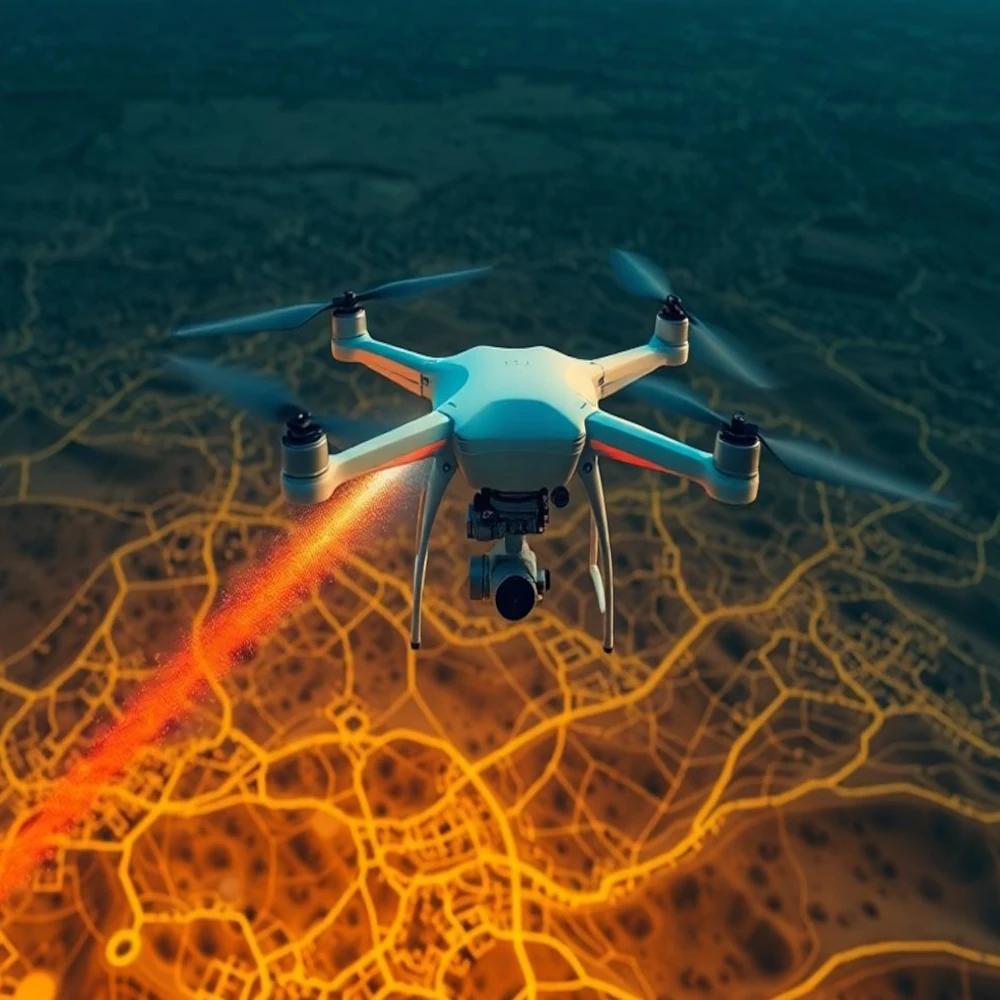
Have you ever watched a drone effortlessly glide over uneven terrain, maintaining a perfect distance from the ground below, and wondered how it manages such precise flight? The answer lies in sophisticated LiDAR technology, and few companies have mastered this art like Benewake. Specializing in advanced ranging solutions, Benewake has become a cornerstone in the drone industry, enabling capabilities that were once the stuff of science fiction. Their technology empowers drones with remarkable Terrain Following abilities, allowing them to navigate complex landscapes with centimeter-level precision. This isn’t just about maintaining a set altitude; it’s about intelligent adaptation to the environment below. Combined with rock-solid Position Holding/Hovering, these systems allow drones to remain perfectly stationary even in challenging wind conditions, providing a stable platform for photography, surveying, and inspection work.
Donation
Coffee to stay awake, thank you very much for your contribution to keeping our website online.
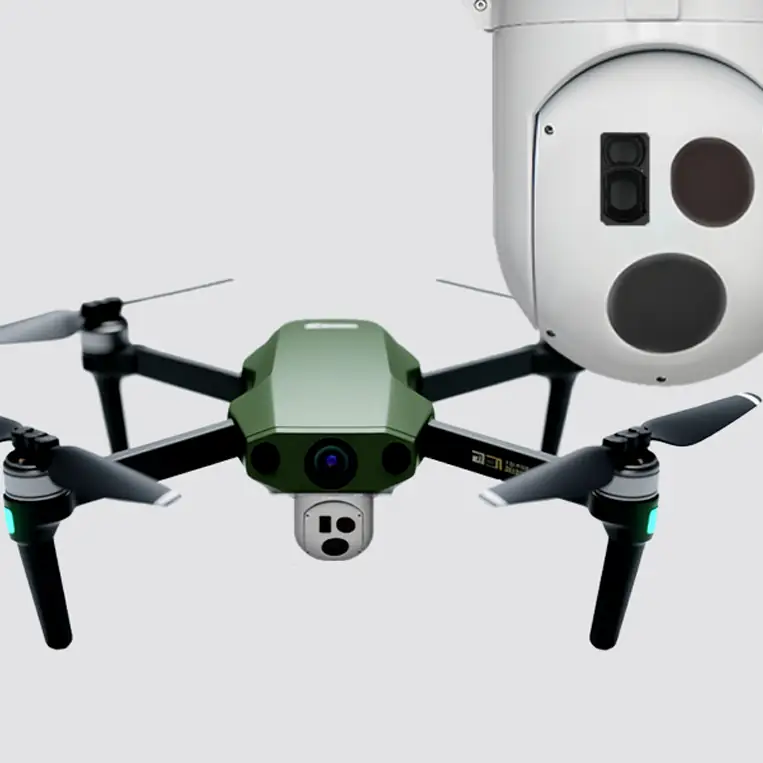
Image Credit: benewake.com
The magic behind these capabilities is often a combination of technologies detailed on benewake.com, including their pioneering Gimbal Rangefinding systems. This technology integrates directly with a drone’s camera gimbal, ensuring that the LiDAR is always pointing exactly where the camera is focused. This allows for incredibly accurate distance measurements to specific targets, which is crucial for applications like volumetric measurements, power line inspections, and construction site monitoring. Furthermore, Benewake’s solutions enable Stable-altitude Cruising, a feature that ensures a drone moves smoothly at a consistent height above ground level, not just sea level. This is vital for mapping and agricultural spraying, where uniformity is key. Perhaps most impressively, these systems form the backbone of a robust Detect and Avoid framework, allowing drones to sense and autonomously navigate around obstacles like trees, towers, and buildings, making autonomous flights safer and more reliable than ever before.
The Core Technology: Understanding Benewake’s LiDAR Advantage
To truly appreciate what Benewake brings to the drone industry, one must understand the fundamental superiority of LiDAR over other sensing methods like ultrasonic or simple visual systems. LiDAR, which stands for Light Detection and Ranging, works by emitting laser pulses and measuring the time it takes for them to return after hitting a surface. This method provides highly accurate distance data, unaffected by lighting conditions or the texture of the ground, which can fool camera-based systems. Benewake has refined this technology into compact, lightweight, and power-efficient modules perfectly suited for drone integration. Their sensors provide a rapid and precise data stream that the drone’s flight controller uses to make real-time adjustments.
This real-time data is what enables advanced flight modes. For instance, when a drone is tasked with Stable-altitude Cruising over a field with rolling hills, the Benewake LiDAR constantly measures the distance to the ground dozens of times per second. As the ground rises, the drone ascends; as it falls away, the drone descends, all while maintaining a preset height above the terrain. This is a far cry from traditional barometer-based altitude hold, which only maintains height relative to the takeoff point and would cause a drone to crash into an upward slope. The precision of this technology, as showcased on benewake.com, is what allows surveyors to create highly accurate topographic maps and farmers to ensure even chemical application across their entire fields.
Mastering Complex Landscapes with Intelligent Terrain Following
Terrain Following is arguably one of the most transformative applications of Benewake’s technology. Imagine conducting a survey of a mining site, a railway line, or a forested area. The ground level is constantly changing, and flying at a fixed altitude would result in inconsistent data quality and a high risk of collision. Benewake’s LiDAR solves this problem elegantly. The system creates a real-time profile of the ground beneath the drone, allowing it to mimic the contours of the land. This capability is not just about safety; it’s about data integrity and operational efficiency.
In practice, this means a drone can be programmed to fly a specific mission where the only constant is its height above the ground. Whether it’s flying through a canyon, over a construction site with various stockpiles, or along a pipeline route, the drone’s Terrain Following ability ensures it captures data from the optimal distance every time. This consistent perspective is crucial for photogrammetry, where overlapping images need to be captured from a uniform distance to create accurate 3D models. The reliability of this function also enhances the drone’s overall Detect and Avoid capabilities, as the primary “obstacle”—the ground—is now an actively tracked surface that the drone can intelligently follow instead of just avoiding.
The Art of Staying Put: Precision Position Holding and Hovering
While movement gets most of the attention, a drone’s ability to stay perfectly still is equally critical for many professional applications. Position Holding/Hovering is a complex dance of GPS, vision systems, and, increasingly, LiDAR. Benewake’s sensors contribute significantly to this stability, especially in environments where GPS signals are weak or unreliable, such as near large structures, under tree canopies, or indoors. By providing a constant, accurate measurement to the ground, the LiDAR sensor gives the flight controller a vital vertical reference point that is independent of satellite signals.
This robust Position Holding/Hovering is essential for tasks like infrastructure inspection. When a drone is examining a cell tower, a wind turbine, or a bridge, it needs to maintain a fixed position relative to the structure for detailed visual analysis. Even a slight drift could mean missing a critical crack or defect. With Benewake’s technology, the drone can lock itself in space with remarkable precision. This stability also works in tandem with Gimbal Rangefinding; as the drone holds position, the gimbal-mounted LiDAR can provide exact distances to specific points on the structure, allowing for precise measurements of things like bolt protrusion or corrosion depth without the pilot ever needing to risk a manual, close-proximity flight.
Enhanced Safety Through Proactive Detect and Avoid Systems
As drones move towards greater autonomy and are deployed in more complex scenarios, the ability to sense and avoid obstacles becomes non-negotiable. This is where Benewake’s role in Detect and Avoid (DAA) systems becomes paramount. While full DAA suites often combine visual sensors and radar, LiDAR provides a critical layer of reliable, high-precision ranging data. It is exceptionally good at detecting thin objects like wires, branches, and poles that can be invisible to cameras and problematic for other sensors.
A drone equipped with a Benewake LiDAR for Detect and Avoid is essentially gifted with a form of spatial awareness. As it executes a mission involving Stable-altitude Cruising, the sensor is constantly scanning the flight path. If an unexpected obstacle appears—a newly erected construction crane, for example—the LiDAR detects it and feeds the data to the flight controller, which can then execute a pre-programmed avoidance maneuver, such as stopping or flying around the object. This proactive safety feature is a giant leap towards enabling Beyond Visual Line of Sight (BVLOS) operations, which are essential for scaling commercial drone applications like delivery and long-range infrastructure monitoring. The technical specifications and case studies available on benewake.com provide deep insights into how this technology is being implemented to meet stringent aviation safety standards.
Practical Applications: Where Benewake-Powered Drones Excel
The theoretical advantages of Benewake’s technology are compelling, but they truly shine in real-world applications. Across numerous industries, drones equipped with these systems are solving old problems in new ways and creating opportunities that didn’t previously exist.
- Precision Agriculture: Drones perform Stable-altitude Cruising for consistent crop spraying and use Terrain Following for accurate field mapping and health assessment on sloped land.
- Surveying and Mapping: The cornerstone of modern photogrammetry, where precise Position Holding/Hovering and ground-level tracking are essential for creating high-resolution, accurate 3D models and digital elevation models.
- Search and Rescue: The ability to follow terrain closely and maintain a steady hover allows rescuers to scan difficult-to-reach areas safely and thoroughly, even at night or in fog.
- Infrastructure Inspection: From power lines to pipelines, Gimbal Rangefinding provides exact measurements of clearances and defects, while robust DAA keeps the drone safe from the structure itself.
- Cinematography: Filmmakers can create stunning, dynamic shots with drones that smoothly follow the contour of the land, adding a new dimension to aerial videography.
In each of these cases, the common denominator is the need for reliable, autonomous flight that is aware of and can adapt to its environment—a capability that Benewake’s technology delivers reliably. Exploring benewake.com reveals a wealth of information and success stories from these very sectors.
Implementing Benewake Technology: A Guide for Operators and Integrators
For commercial drone operators or companies looking to integrate this technology into their fleet, understanding the implementation process is key. Benewake designs its sensors to be as integration-friendly as possible, typically communicating with the flight controller via standard protocols like UART or CAN bus. The first step is selecting the right sensor model based on the required range, accuracy, field of view, and operational environment (e.g., dealing with highly reflective or absorbent surfaces).
Once integrated, calibration is crucial. This involves ensuring the sensor is properly aligned and its data is correctly interpreted by the flight controller to enable functions like true Terrain Following and accurate Position Holding/Hovering. For advanced applications like Gimbal Rangefinding, the mechanical and data integration between the LiDAR module and the gimbal system must be seamless. Finally, thorough testing in a safe, controlled environment is mandatory to validate the performance of the Detect and Avoid system and other autonomous functions. Proper implementation transforms a standard drone into an intelligent data-collection and task-execution platform, unlocking new levels of efficiency and safety.
Donation
Coffee to stay awake, thank you very much for your contribution to keeping our website online.
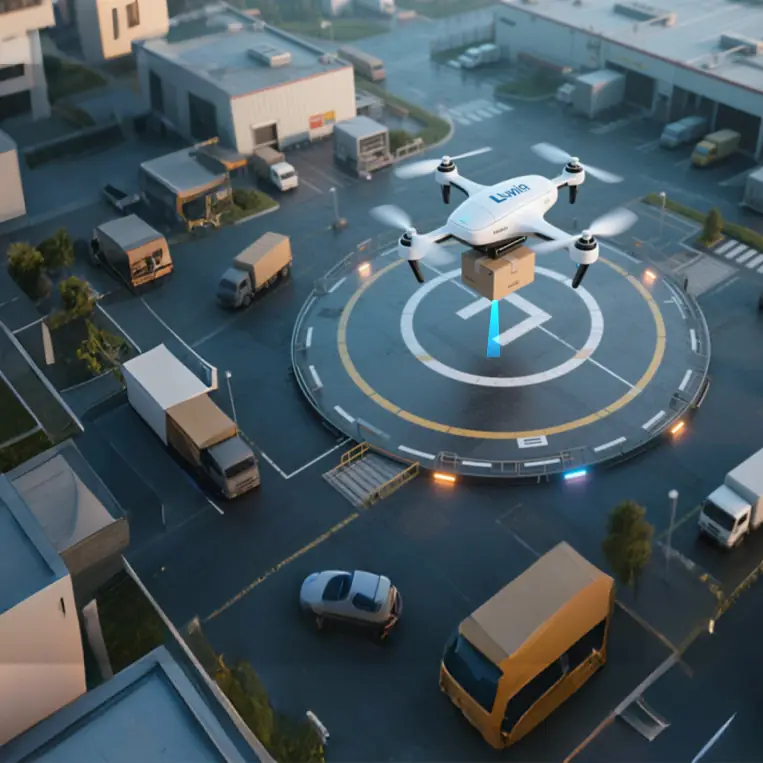
Image Credit: benewake.com
Frequently Asked Questions About Benewake Drone Technology
Q: How does Benewake’s LiDAR-based Terrain Following differ from GPS-based altitude hold?
A> GPS-based altitude hold uses barometric pressure to maintain height relative to the takeoff point. This is useless over varying terrain. Benewake’s LiDAR measures the actual distance to the ground directly below the drone, enabling it to accurately follow the terrain’s contours, ascending hills and descending into valleys automatically.
Q: Can these systems operate in all weather conditions?
A> LiDAR generally performs well in a variety of lighting conditions but can be affected by heavy rain, fog, or snow, which can scatter the laser pulses. For all-weather operation, a multi-sensor approach combining LiDAR with other technologies like radar is often recommended for a robust Detect and Avoid system.
Q: Is the technology only for high-end, commercial drones?
A> While prevalent in the commercial sector, Benewake offers a range of sensors. Some smaller, lighter, and more affordable models are becoming suitable for integration into prosumer platforms, bringing advanced capabilities like improved Position Holding/Hovering to a broader market.
Q: Where can I find technical specifications and support for integration?
A> The primary source for detailed datasheets, SDKs, and technical documentation is the official manufacturer’s website at benewake.com. Their support team can also assist with specific integration challenges.
Q: How crucial is Gimbal Rangefinding for inspection work?
A> It’s transformative. Instead of estimating distances from photos, inspectors get precise, laser-measured distances to specific points of interest. This allows for accurate quantification of defects, such as the exact depth of corrosion or the gap in a crack, which is essential for maintenance planning and regulatory reporting.
What kind of drone application are you most interested in automating with LiDAR technology? Do you see Terrain Following or robust Detect and Avoid as being more critical for your specific use case? Share your thoughts and experiences in the comments below!